Toggle Nav
 Inspire.
Create.
Stitch.
Inspire.
Create.
Stitch.
Inspire.
Create.
Stitch.
Search
Inspire.
Create.
Stitch.
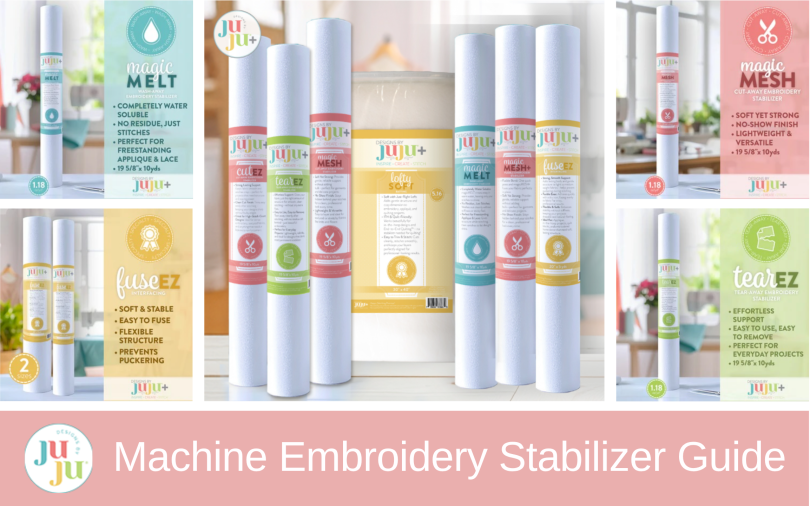
Learn how to choose the right machine embroidery stabilizer for your fabric, design, and finished project. This guide explains cut-away, tear-away, wash-away, batting, interfacing, and topper basics so you can stitch with confidence.
Stabilizer may be one of the most confusing parts of machine embroidery, especially when several rolls in your sewing room look nearly identical! You may wonder whether you need cut-away, tear-away, or wash-away stabilizer, how many layers to use, and whether batting or interfacing can do the same job.
You’re not alone. The good news is that choosing a stabilizer becomes much easier when you focus on a few simple questions about your fabric, design, and finished project.
We’ve gathered our DBJJ+ Education Series, product information, and two detailed Designs by JuJu blog posts into one resource. Bookmark this guide and return whenever you need help deciding what belongs in your hoop.
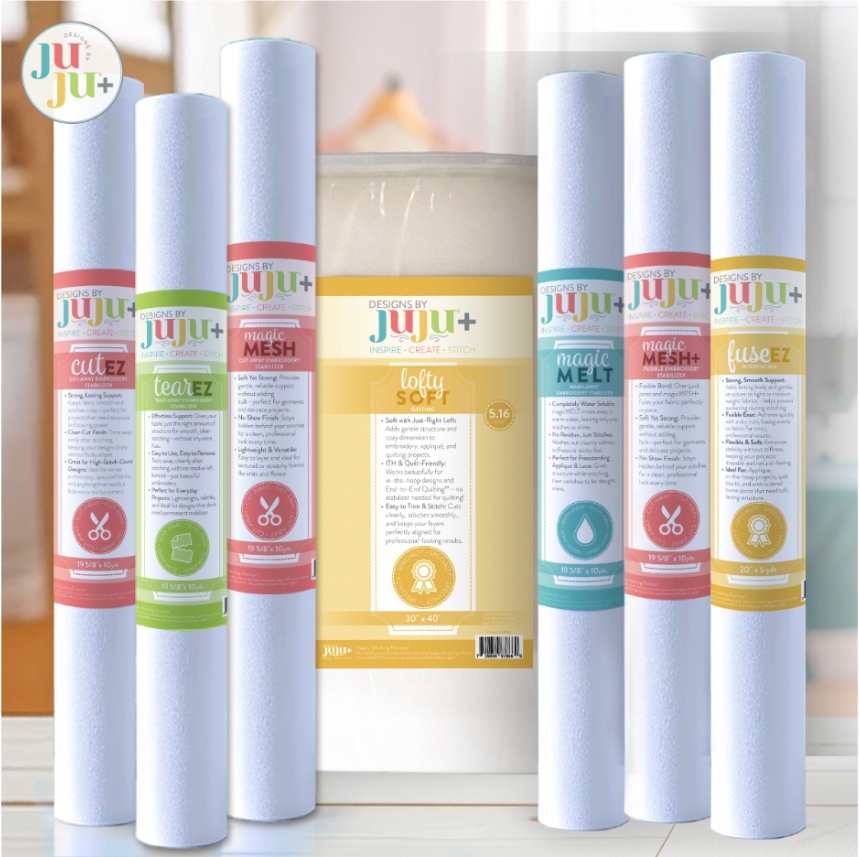
The DBJJ+ product family includes stabilizers, batting, and interfacing for many kinds of embroidery projects.
Your embroidery machine may do the stitching, but your fabric still needs support. Stabilizer helps hold the fabric steady, supports the thread and stitches, and reduces shifting, stretching, and puckering while the design is being embroidered.
Some stabilizers stay behind the embroidery permanently so the design continues to receive support through wearing and washing. Others tear or rinse away when the stitching is complete.
There is rarely only one stabilizer that can work for a project. Fabric is an important factor, but design density and stitch count, finished use, laundering, desired softness or structure, and whether the support should remain or disappear all matter too. Think of the recommendations in this guide as reliable starting points. Another product—or a layered combination—may also give you a successful result.
For a quick introduction to the three main stabilizer categories, watch Machine Embroidery Stabilizers Explained | DBJJ+ Education Series.
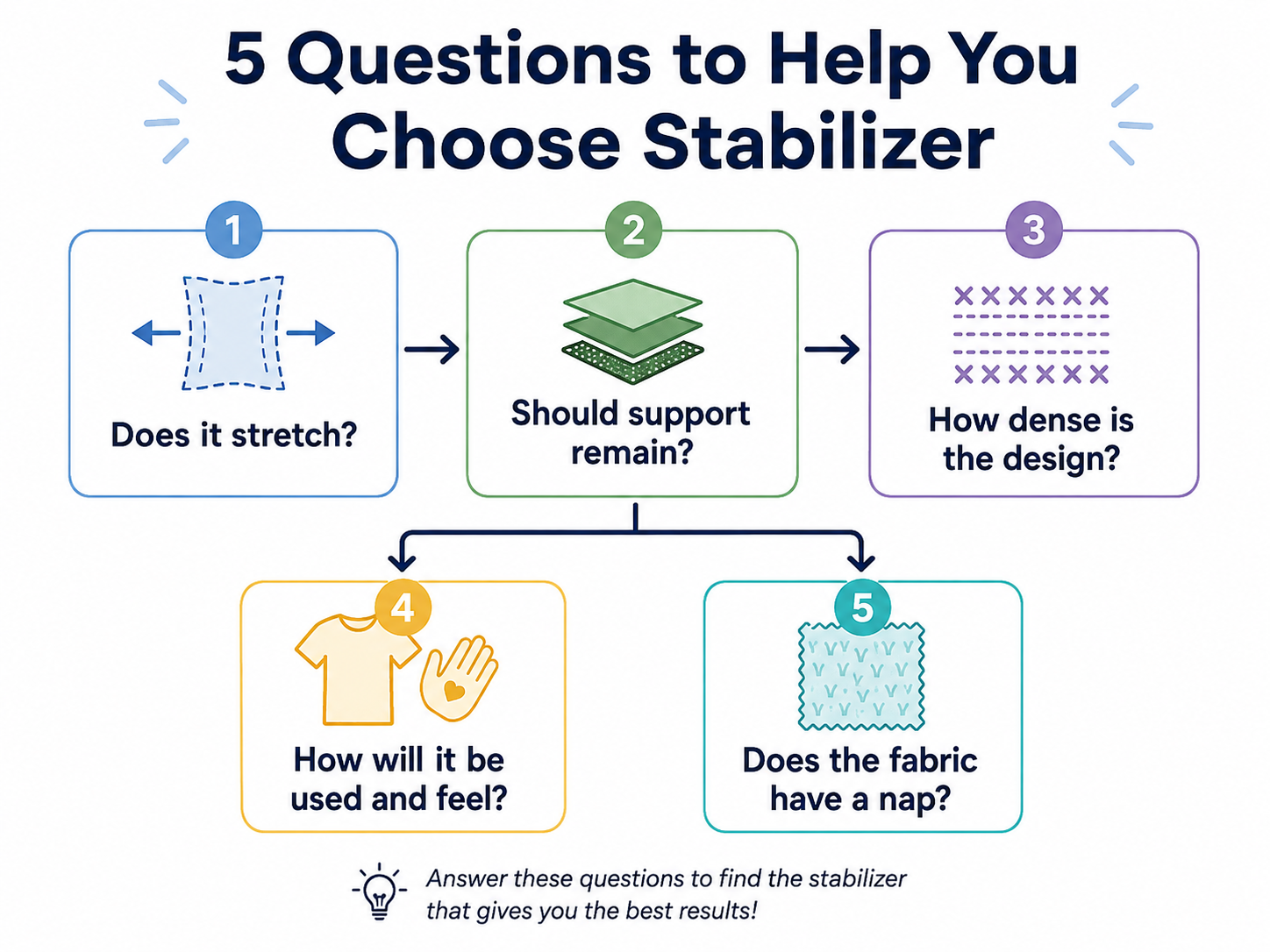
Before choosing a product, ask yourself these five questions.
1. Does the fabric stretch?
Stretchy fabrics often benefit from permanent cut-away support because it continues supporting the stitches as the fabric moves and is laundered. T-shirts, sweatshirts, knits, baby garments, and many other wearables are good places to start with a cut-away stabilizer.
A memorable tip from our Stabilizer Overview blog post is: If you wear it, don’t tear it. Think of this as a beginner-friendly starting point rather than an absolute rule. Design density, the amount of stretch, finished use, laundering, and the feel you want can all affect which stabilizer setup works well. Depending on the design and desired result, another stabilizer or a layered combination may also be appropriate.
2. Should the stabilizer remain after stitching?
Consider what kind of support and finish the project needs:
3. How dense is the embroidery design?
A light, decorative design requires less support than a dense, filled design with a high stitch count. Dense designs, wide satin stitches, unstable fabrics, and large embroidery areas may require a stronger stabilizer or more than one layer.
Always begin with the instructions included with your specific Designs by JuJu project. When the instructions name a stabilizer type or number of layers, that recommendation should be your starting point.
4. How will the finished project be used—and how should it feel?
A T-shirt that will be worn and washed often has different needs from a decorative wall hanging. A baby item or garment may call for soft, low-bulk support, while dense embroidery or a project that needs a firmer finish may benefit from more substantial support.
Consider laundering, wear, skin contact, softness, flexibility, and structure before making your final choice.
5. Does the fabric have a nap or raised texture?
Towels, fleece, sherpa, and other textured fabrics may also need an appropriate water-soluble topper designed for that purpose on the front of the fabric. The topper helps keep stitches from sinking into the fibers.
A topper is an additional layer—not a substitute for the backing stabilizer under the fabric.
| What does your project need? | A strong starting point | DBJJ+ product to consider | Why it may be a good fit |
| Temporary support for stable quilting cotton or another woven fabric with a light- to medium-density design | Tear-away stabilizer | tearEZ Tear-Away Stabilizer | Supports the fabric during stitching and removes afterward, leaving less backing behind. |
| Soft, permanent support with minimal bulk for garments, baby items, lightweight fabrics, or many in-the-hoop projects | Soft cut-away mesh | magicMESH Cut-Away Stabilizer | Provides lasting support while helping the finished project remain soft and flexible. |
| Soft, permanent support plus added control during hooping | Fusible cut-away mesh | magicMESH+ Fusible Cut-Away Stabilizer | Fuses to the fabric to reduce movement, which is especially helpful with stretchy or slippery materials. |
| Fusible control for paper or cardstock | Fusible cut-away mesh | magicMESH+ Fusible Cut-Away Stabilizer | Helps keep paper or cardstock smooth and stable during embroidery. |
| Firmer, more substantial permanent support for dense or high-stitch-count embroidery | Traditional cut-away stabilizer | cutEZ Cut-Away Stabilizer | Provides lasting support for stitch-intensive designs and projects needing more substantial reinforcement. |
| Support that should completely disappear, such as for freestanding lace, freestanding applique, sheer fabric, or delicate embroidery | Wash-away stabilizer | magicMELT Water-Soluble Stabilizer | Supports the stitches during embroidery and dissolves in warm water afterward. |
| Softness and loft in a quilted or in-the-hoop project | Stabilizer plus batting | loftySOFT™ Batting | Adds dimension between the project layers but does not replace the stabilizer specified in the instructions. |
| Added body or shape in applique, quilt blocks, in-the-hoop projects, or home decor | Stabilizer plus fusible interfacing | fuseEZ™ Fusible Interfacing | Adds permanent structure to the fabric and serves a different purpose from embroidery stabilizer. |
| Help keeping stitches above the nap on towels, fleece, sherpa, or another raised fabric | Appropriate backing stabilizer plus a purpose-made water-soluble topper | Backing depends on the fabric, design, and desired finish | The backing supports the embroidery while the topper helps keep stitches from sinking into the fibers. |
Use this chart as a strong starting point rather than a list of exclusive pairings. Some projects can be stitched successfully with more than one stabilizer setup. For example, a stretchy fabric with a lighter design may work well with magicMESH or magicMESH+, while a denser design on that same fabric may benefit from cutEZ. Multiple layers of a lighter stabilizer may also provide the support you need while preserving a softer finished feel.
Absolutely! Stabilizer selection is not a one-answer test. Two embroiderers may make different choices and both get excellent results.
You might choose cutEZ when you want firmer support, layer magicMESH when you want more support with a softer finished feel, or choose magicMESH+ when fusible control will make hooping easier. Multiple layers of a lighter stabilizer may work well in some situations. A couple of layers of tearEZ may also be a workable alternative for certain fabric and design combinations, especially when that is what you have on hand.
Begin with the recommendation in your project instructions, then test any alternative with the actual fabric and design. Look at the front and back of the sample and consider its stability, softness, flexibility, and overall appearance. If the finished project will be laundered, washing a test sample can also help you decide whether the stitches have enough lasting support.
Although several DBJJ+ products may look similar on the roll, each offers a different balance of strength, softness, removability, and ease of use. Because those qualities overlap, more than one product may sometimes be appropriate for the same project.
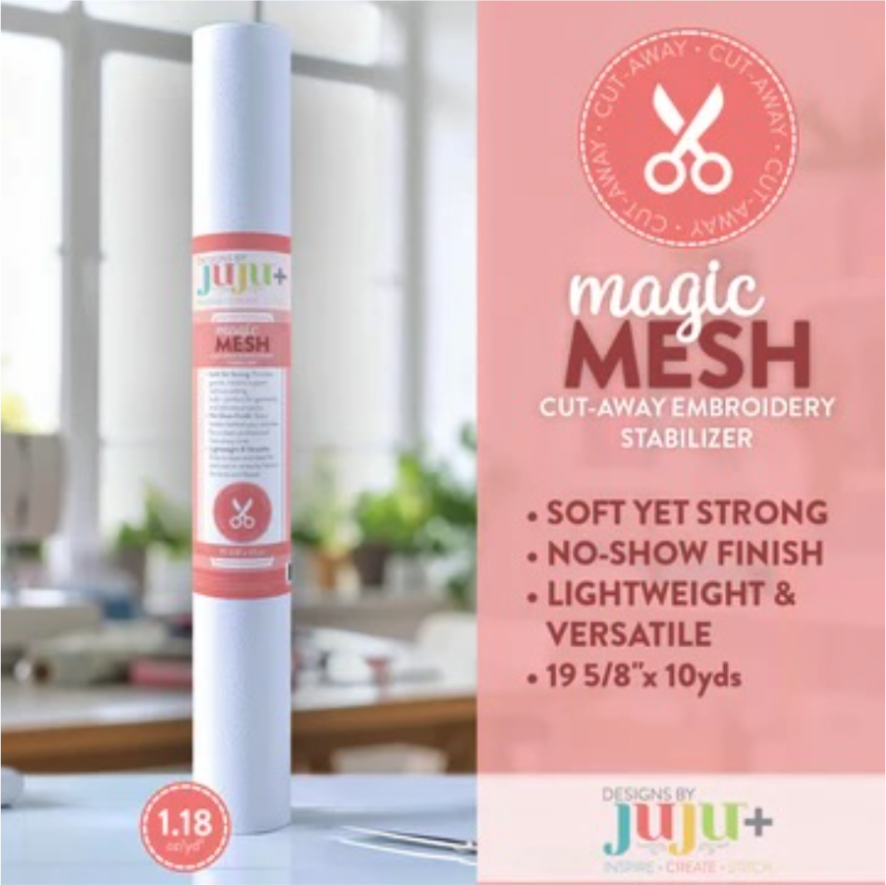
magicMESH Cut-Away Stabilizer is a soft, lightweight cut-away stabilizer that provides lasting support without adding unnecessary bulk. It is a great starting choice for many Designs by JuJu in-the-hoop projects, garments, baby items, and other projects where permanent support is needed with a soft, flexible finished feel.
Because it remains behind the embroidery, magicMESH continues supporting the stitches after the project is complete. It can also be layered when a design needs additional support.
Learn more in How to Use Cut-Away Stabilizer | DBJJ+ Education Series.
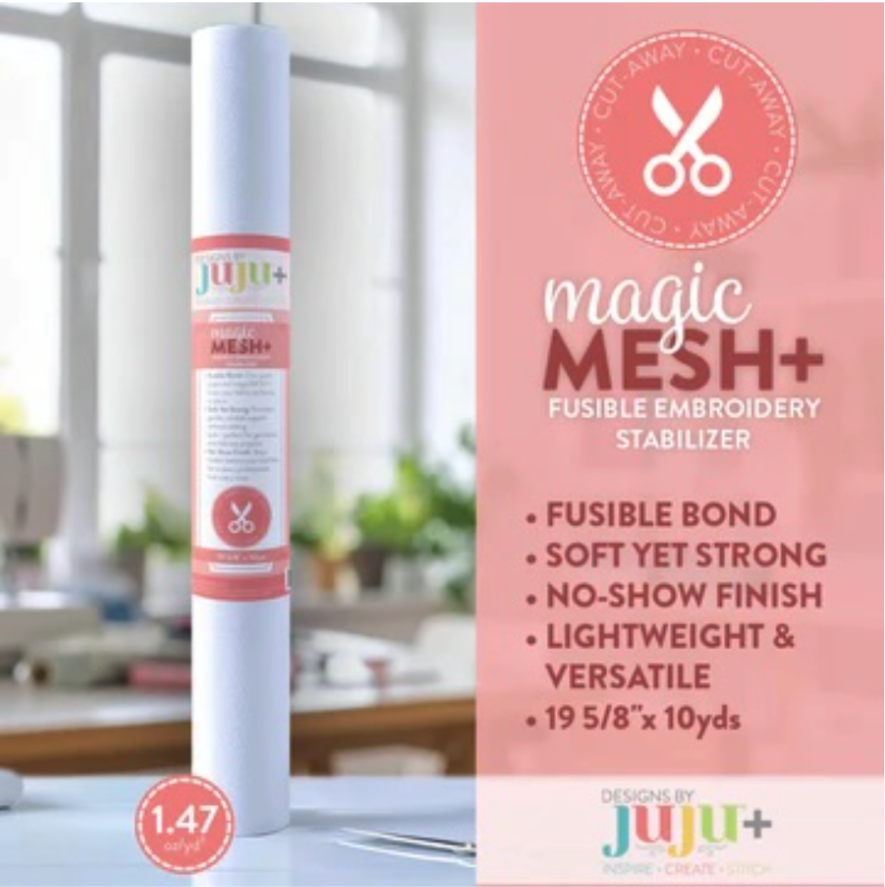
magicMESH+ Fusible Cut-Away Stabilizer provides the same general soft mesh support as magicMESH with the added benefit of being fusible. Fusing the stabilizer to the back of the fabric helps reduce movement while you hoop, position, and stitch.
It is especially helpful for stretchy or slippery fabrics, or whenever you want more control during hooping. It is also useful for garments, delicate projects, and embroidered greeting cards. The product can be layered when a detailed or heavy-fill design needs additional support.
Follow the product instructions for the correct pressing temperature and time, and test delicate fabrics before beginning the full project.
See when and how to use it in How to Use Cut-Away Stabilizer | DBJJ+ Education Series.
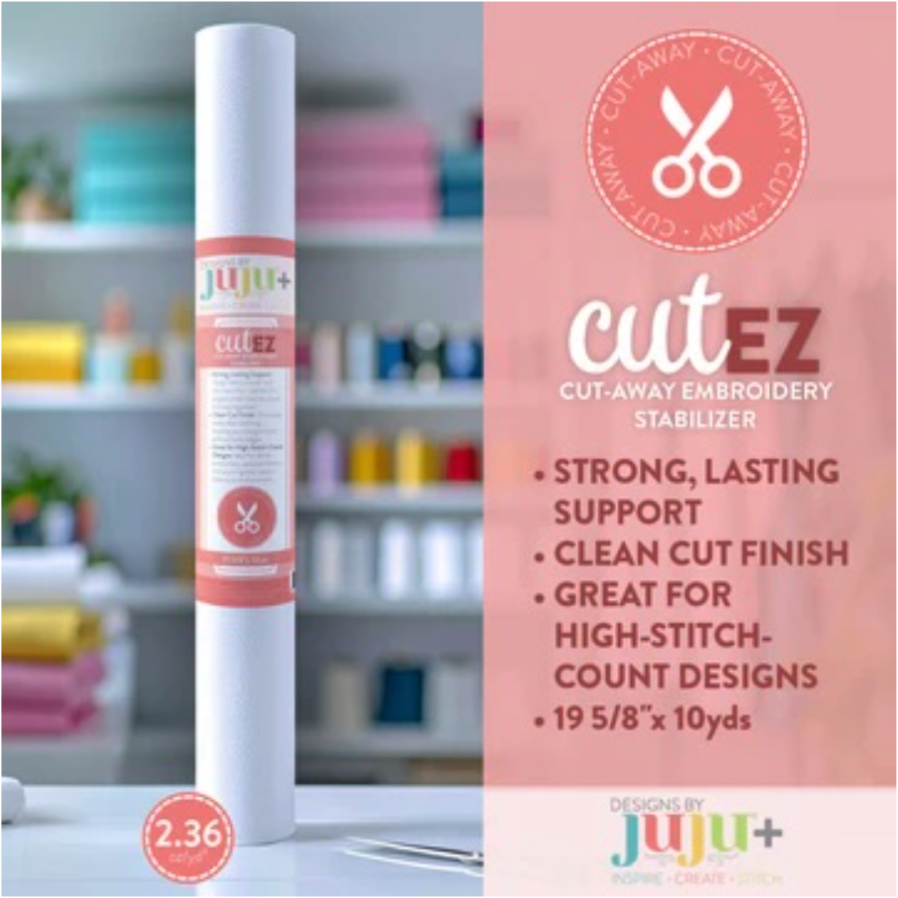
cutEZ Cut-Away Stabilizer is our stronger, more traditional cut-away stabilizer. It is a great choice when you want firmer or more substantial permanent support, especially for dense or high-stitch-count embroidery.
It can also be appropriate for stretchy fabrics when the design or desired finished result calls for stronger support.
After embroidery, trim the excess stabilizer without cutting too close to the stitches. The stabilizer that remains behind the design will continue helping it hold its shape.
See when stronger permanent support may be useful in How to Use Cut-Away Stabilizer | DBJJ+ Education Series.
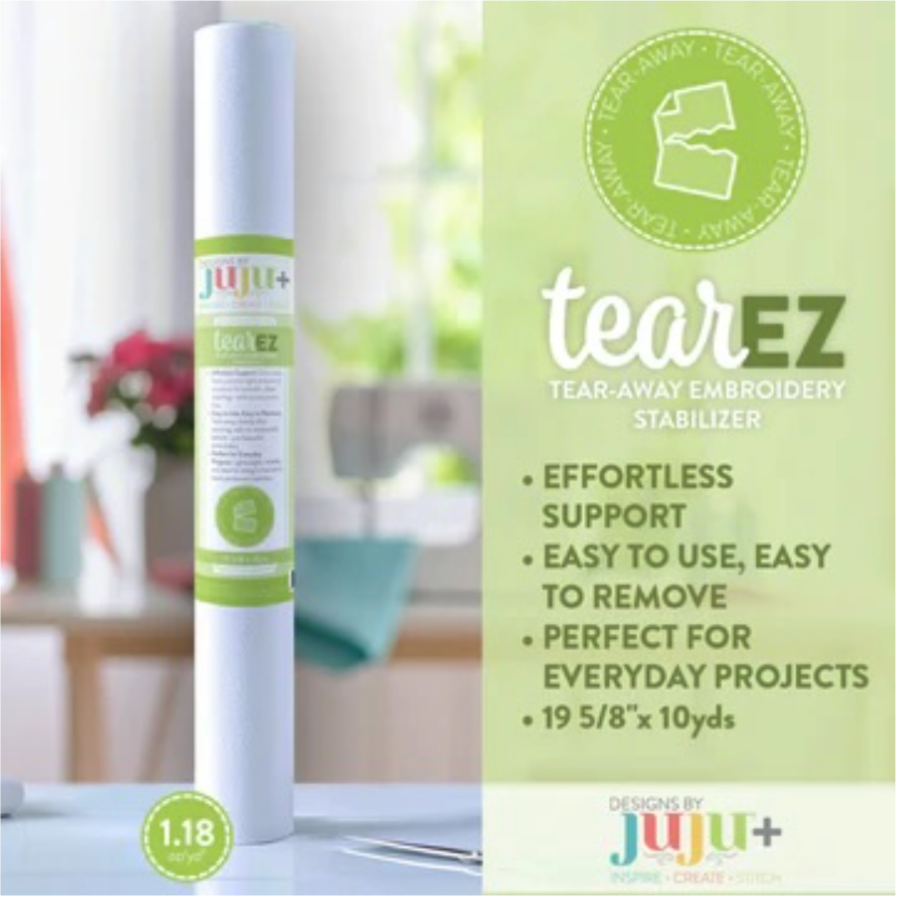
tearEZ Tear-Away Stabilizer is a lightweight tear-away stabilizer for projects that need temporary support rather than permanent backing. It is a great starting choice for stable, woven fabrics and light- to medium-density embroidery designs.
Once the embroidery is complete, support the stitches with one hand and gently tear away the excess stabilizer.
Because tear-away does not remain behind the design, it is not usually our first recommendation for stretchy garments that will be worn and laundered frequently. However, multiple layers of tear-away may be workable for some fabric and design combinations, especially when that is what you have on hand. A test stitch will help you decide whether the finished result has enough support.
Learn more in the How to Use Tear-Away Stabilizer | DBJJ+ Education Series.
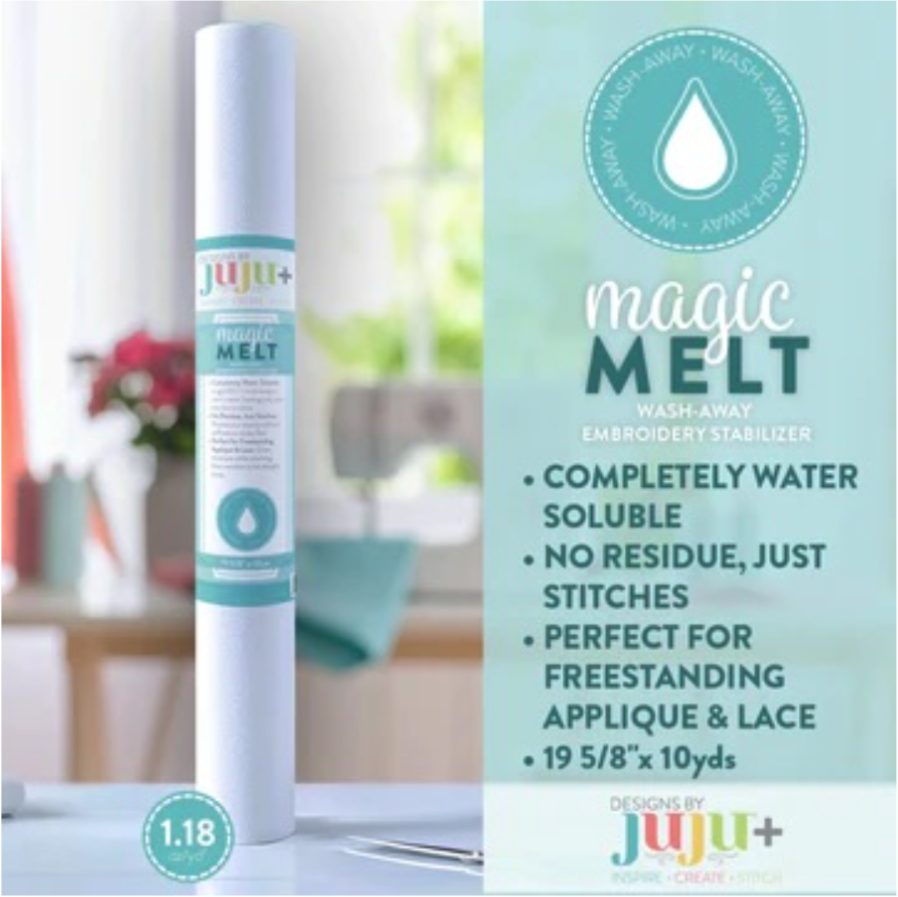
magicMELT Water-Soluble Stabilizer is a wash-away stabilizer that dissolves in warm water. It is designed for projects such as freestanding lace, freestanding applique, and delicate embroidery where you need support while stitching but do not want stabilizer remaining in the finished piece.
Dense freestanding designs may require two layers. After stitching, trim away the excess, rinse or soak according to the product directions, blot away excess water, and allow the project to dry flat so the stitches keep their shape.
Watch the How to Use Wash-Away Stabilizer | DBJJ+ Education Series for a quick look at wash-away stabilizer.
A note about textured fabrics: For towels, fleece, sherpa, and other raised fabrics, our standard recommendation is an appropriate water-soluble topper designed for that purpose. The topper is placed on the front of the fabric and is used with—not instead of—the backing stabilizer selected for the fabric and design.
Want the complete stabilizer overview? Watch The Complete Guide to Machine Embroidery Stabilizers | DBJJ+ Education Series to see the cut-away, tear-away, and wash-away lessons brought together and learn how fabric and project needs can help you choose a strong starting point. It’s a convenient reference to revisit whenever you’re planning a new embroidery project.
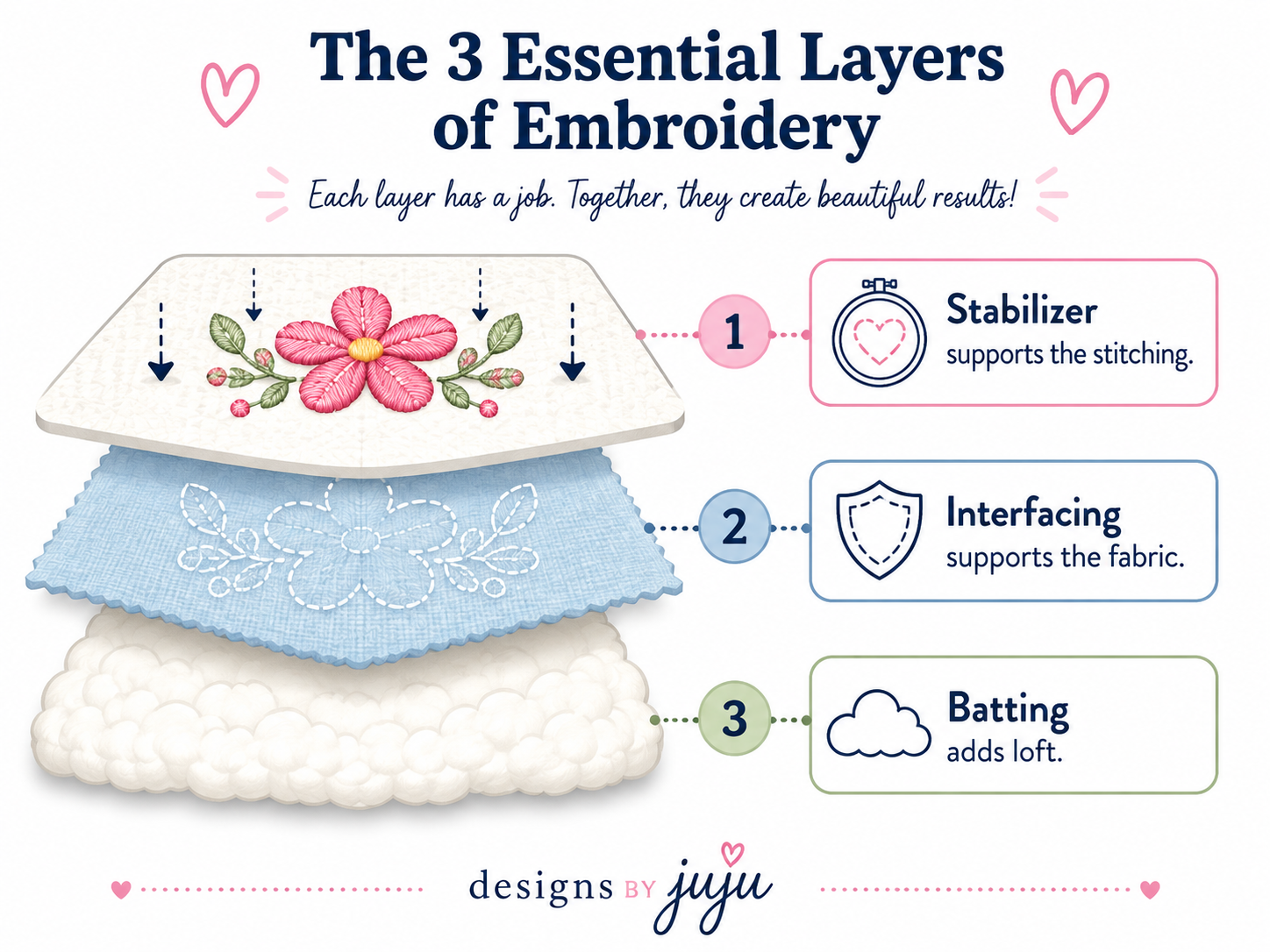
DBJJ+ also offers specialty products that support the finished project in different ways. They may be used in the same project as stabilizer, but they are not interchangeable.
Not sure how stabilizer differs from batting and interfacing? Watch Machine Embroidery Specialty Products Explained | DBJJ+ Education Series for a quick explanation.
One project may require all three. For example, an in-the-hoop placemat might use stabilizer in the hoop, batting for dimension, and interfacing to give one of the fabric layers additional body.
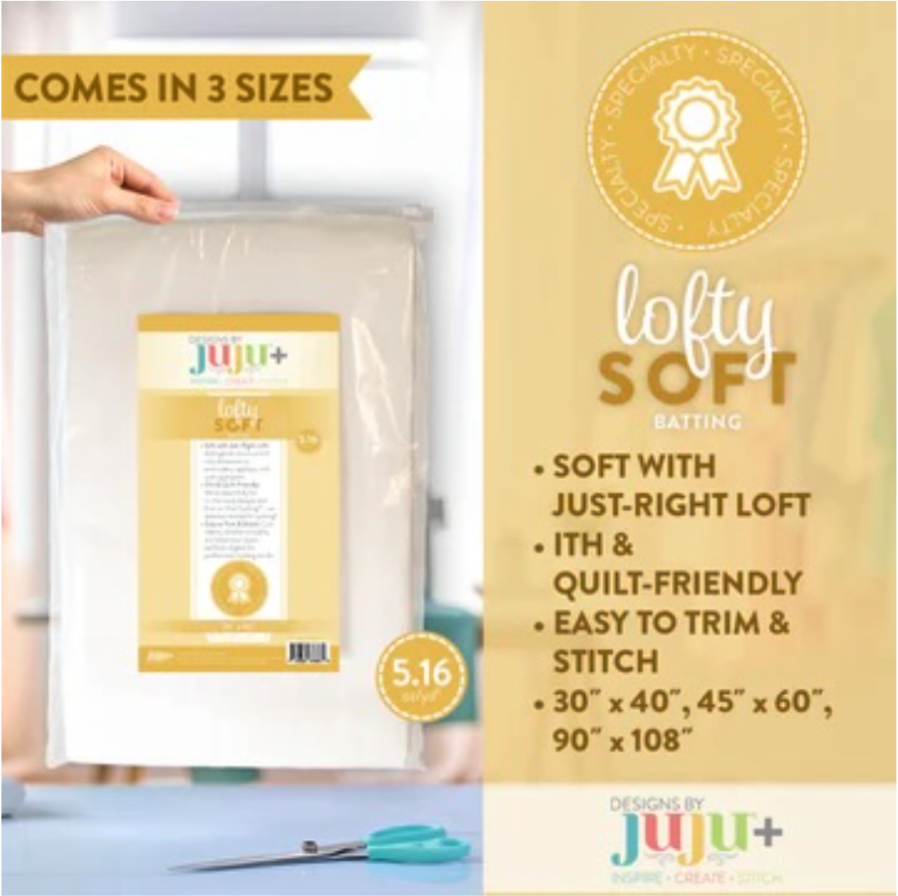
loftySOFT™ Batting is a soft, needle-punched viscose batting made for quilted and in-the-hoop projects. It adds gentle loft and dimension while remaining stable during stitching.
Use it when your project needs a padded or quilted layer, including in-the-hoop projects, quilted embroidery, and End-to-End Quilting™. Cut the batting to the size directed in your project instructions and layer it where indicated.
Remember that batting and stabilizer perform different jobs. If your instructions call for both, include both.
Learn more about where batting fits into your embroidery projects in What Is loftySOFT™ Batting? | DBJJ+ Education Series.
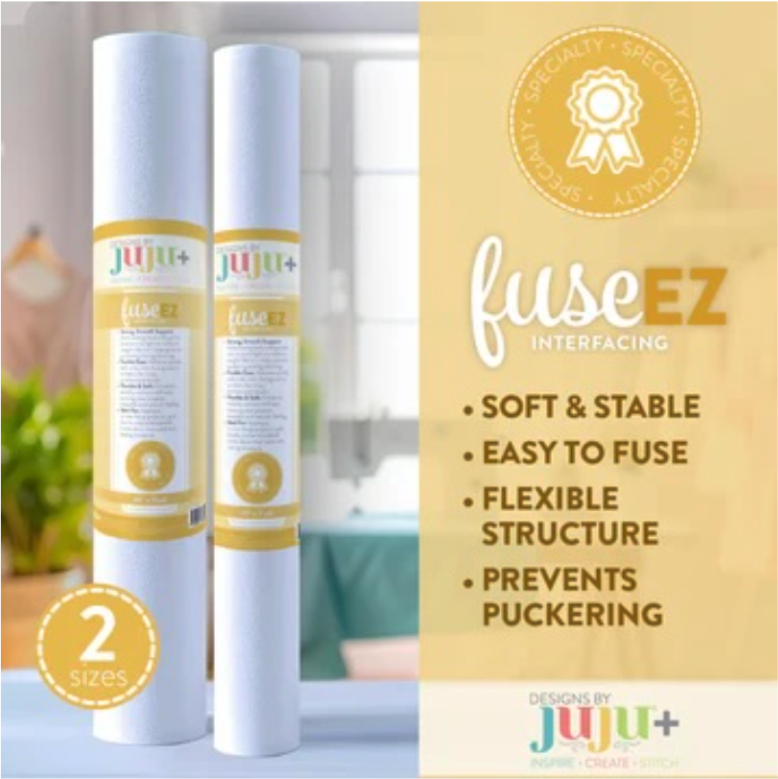
fuseEZ™ Fusible Interfacing is a woven cotton interfacing that adds soft, permanent structure to light- and medium-weight fabrics. It is useful for applique, quilt blocks, in-the-hoop projects, and embroidered home decor that need more body without becoming stiff.
Follow the complete product preparation and pressing directions before use. The current instructions include soaking fuseEZ in warm water, drying it flat, placing the fusible side against the wrong side of the fabric, and using a dry press to create the bond.
Once applied, fuseEZ remains part of the project. It may help the fabric stay smooth and structured, but you should still use the embroidery stabilizer specified in the project instructions.
Before using fuseEZ, watch How to Use fuseEZ™ Interfacing | DBJJ+ Education Series for the preparation, pressing, and application steps.
Want the complete specialty-product overview? Watch The Complete Guide to DBJJ+ Specialty Products | DBJJ+ Education Series to see the loftySOFT™ Batting and fuseEZ™ Interfacing lessons together, including how batting adds softness and dimension and how interfacing adds structure.
The DBJJ+ Education Series includes quick overviews, focused product lessons, and two complete guides that bring everything together. Choose the video that matches your question, or return to the complete guides whenever you need a refresher.
You can also save the complete DBJJ+ Education Series playlist so the whole collection is easy to find.
This guide is your quick starting point, but our other blog posts offer even more examples, photos, and practical tips.
The Stabilizer Overview is a friendly introduction to the three main stabilizer families. It includes real project examples using tear-away, cut-away, and wash-away stabilizers, along with a helpful tip for labeling and organizing your stabilizer collection.
The Embroidery Stabilizer Guide takes a deeper look at different stabilizer weights, mesh and fusible options, sticky-back stabilizer, wash-away products, toppers, layering, and proper hooping. It is a helpful next step when you are ready to understand why two projects in the same general category may still require different support.
A quick check before hooping can prevent a great deal of frustration later.
Proper hooping and full stabilizer coverage help prevent the stabilizer from shifting, folding under the hoop, or pulling loose during embroidery.
You do not need to memorize one right answer for every project. Start with the recommendations in your design instructions and this guide, then adjust for the fabric, design density, laundering, and finished feel you want. As you test different combinations, you will quickly learn which products and layers work well for your machine, materials, and stitching style.
Explore the complete DBJJ+ product collection, save the Education Series, and bookmark this guide whenever you need a quick refresher.
Please share your projects in the Designs by JuJu Embroidery Blessings Facebook Group, or use the hashtag #designsbyjuju anywhere on social media. We’d love to see what you create!